Personalized practices
Custom meditation: create personalized audio with Manai
Manai is a personalized meditation app that creates guided audio around what you are experiencing and how you want to meet it. Describe your situation, choose a direction such as calm, clarity, or confidence, and shape the words, narration, pauses, and background sound. Save a practice that resonates so you can return to it.
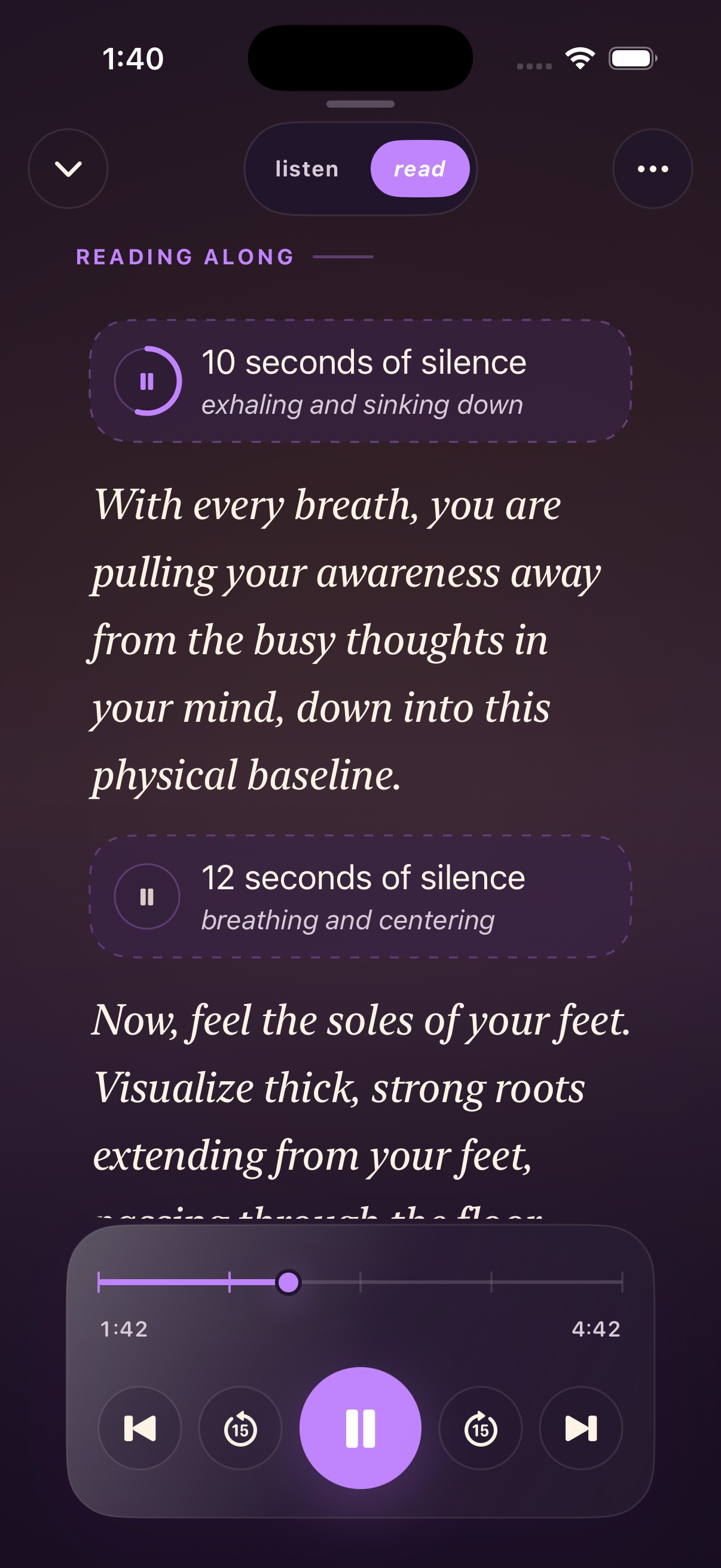
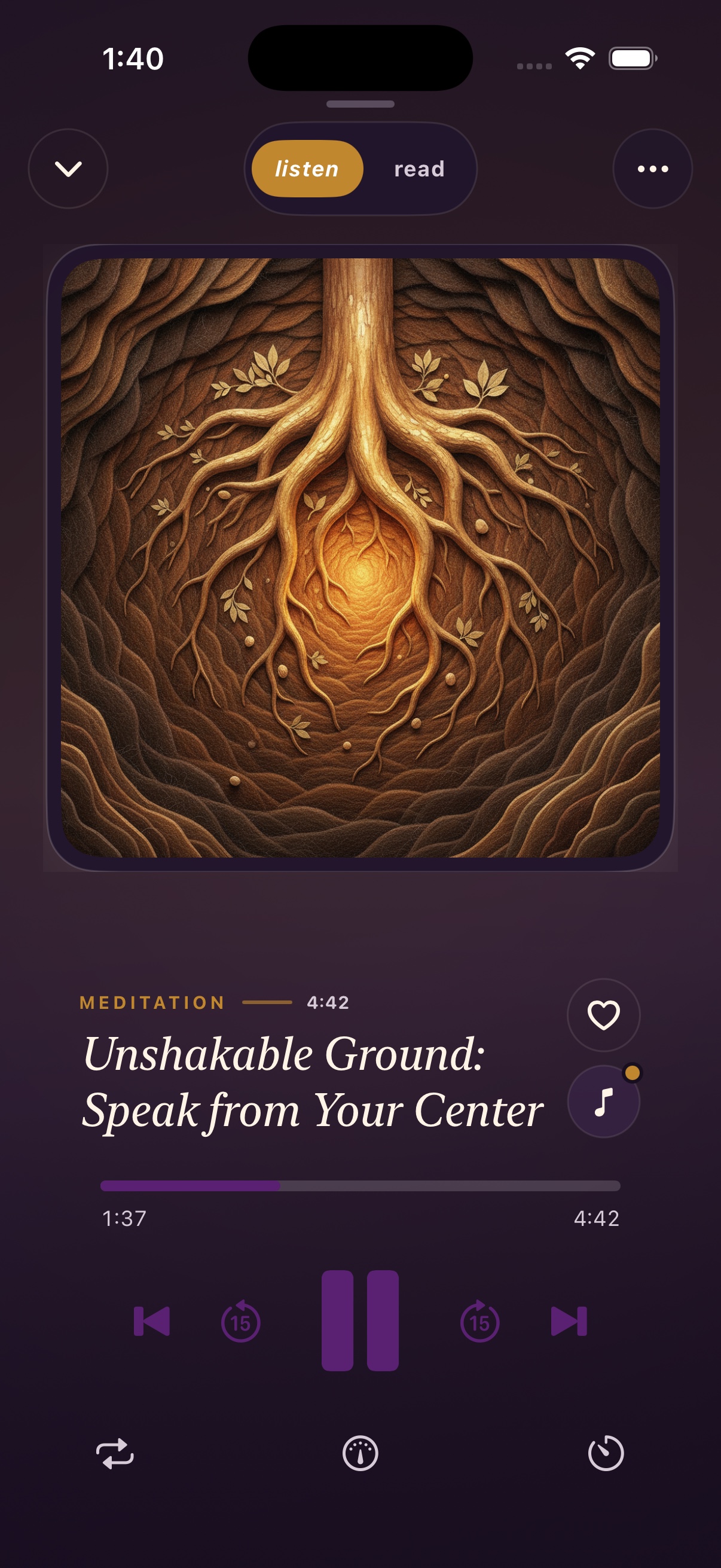
See the words and the pauses
These existing Manai iOS screenshots show the player’s Read and Listen views. The Read view displays the guidance alongside explicit periods of silence; the Listen view brings together the recording, artwork, and playback controls. They illustrate the product interface, rather than the output of the example request below.
What is a custom meditation?
A custom meditation is a practice shaped around your particular situation, intention, and listening preferences. Customization can include the actual script, examples, length, narration, and space between instructions. Selecting a recommended recording is useful too, but it does not necessarily change what the recording says.
For example, “a meditation for calm” names a broad direction. “A short practice before a conversation where I tend to interrupt” gives the guidance a specific response to support. You can create that kind of practice yourself, work with a teacher, or use an app such as Manai to help develop the script and audio.
Personalization should change what the practice says
A useful meditation can begin with a detail a category cannot capture: you have a difficult conversation at four, you rush when you feel misunderstood, and you want to stay warm without abandoning your point. Those details give the guidance a job.
Our view is that a personal practice should earn its place in your day. It should use language you believe, leave enough space to participate, and prepare you for something recognizable. Putting your name into a generic introduction is a much smaller kind of personalization.
If you usually search for an existing recording, compare personalized guided audio with YouTube meditation videos. The guide helps you decide when finding a teacher or visual demonstration matters more, and when you want to author the words and timing yourself.
From your situation to a session
Choose a style if you already have one in mind. A body scan follows sensations, a loving-kindness meditation centers on goodwill, and a chakra meditation can use a spiritual framework you find meaningful. The guided-practice directory connects these and other formats to their own creation guides.
Start a conversation with Manai. Explain the moment, the state you want to practice, your available time, and anything you would rather leave out. Manai can develop the script and produce narrated audio. You can ask for revisions to the wording and pacing, choose a narrator, and shape the sound.
Example request, written for illustration:
Create a six-minute meditation before a conversation with my brother. I feel defensive and want to listen without losing my own point. Use warm, direct language. Leave time to imagine hearing a difficult sentence, pausing, and answering clearly. No music or promises that we will agree.
The useful detail is the response to disagreement. A broad “calm” track might still feel good; this request also gives you a particular response to rehearse.
Work the example into a usable practice
- Name the moment. Before the conversation, you want to notice defensiveness and give yourself time to respond. Keep that focus instead of adding every issue in the relationship.
- Ask to review a short outline or script. A useful structure could be arriving in the room, noticing your current state, imagining one difficult sentence, and choosing a response.
- Check the suggested words. If “I am completely calm” feels false, try “I can feel defensive and still let him finish.” The wording should leave room for your actual experience.
- Choose the listening pace. Ask for silence after the imagined sentence so you can practice your response. Choose a narrator and optional background sound that you want to hear.
- Create, listen, and evaluate. Notice whether the session gives you space to participate. Save the version that fits, and carry one phrase into the conversation.
This is an illustrative design, not a promise that the conversation will go smoothly. Your brother’s response remains outside your control.
Listen, adjust, and return
Review the result. If a phrase feels too grand, ask for a more believable version. If you cannot finish a reflection before the next instruction, request longer pauses. Once the practice is ready and saved, replay it without creating it again.
You can also create yoga, self-hypnosis, or EFT tapping guidance. Choose the format that fits your preference and setting. Manai’s value is helping you shape an experience you want to use, not requiring a different technique every day.
For a simple attention practice, you can also create a mental noting meditation. Choose brief labels and an optional anchor, then leave the narrator quiet enough for you to notice your own experience.
For attention during an ordinary meal, try a personalized mindful eating meditation. Choose a brief introduction or sparse sensory invitations, with the pace of eating left to you.
Manai helps you build a better relationship with yourself through practices you can help shape. You can choose the voice and approach, use selected saved context, and ask for changes. Compare AI and human instruction when choosing the kind of guidance you want.
A quick checklist before you save
- Does the script describe your situation without inventing details?
- Are the phrases believable enough for you to use?
- Is there time to follow each invitation before the next one begins?
- Does the ending fit what you will do afterward, such as returning to work or resting?
- Is there one useful phrase or action you can remember without the recording?
If one answer is no, request that particular change. You do not need to redesign the entire practice.
Frequently asked questions
What makes a meditation personalized?
Your circumstances, intention, examples, language preferences, and pacing can shape the actual guidance. Recommendations from an existing library are another form of personalization; our app comparison explains the difference.
Does Manai create audio or only a written script?
Manai can produce a narrated guided practice from the conversation. Creating new audio takes time; returning to a saved recording does not require a new generation.
Can I use my own voice?
Eligible active paid accounts can create a personal voice when capacity is available. See the own-voice guide for the current limits and distinction from recording a complete session.
Will it make me feel better every time?
No particular change in feeling is guaranteed. You may notice more room to respond, find one phrase useful, or decide the practice needs adjusting. That feedback is part of making it yours.
Create your personal practice with Manai →
Manai offers educational wellness practices. It is not medical care, diagnosis, or treatment. If a practice feels uncomfortable, stop. Seek qualified support for health concerns or urgent distress.